

In partnership with


 So, What Actually Happened?
Tuesday, and I went looking for the next model story. I ended up reading a fine notice from a Dutch regulator. Uber was fined $966 million over decisions its systems made without a person in the loop, and Uber does not call itself an AI company. We scanned 190,000 articles this week so you don't have to. On a completely different desk, a survey of more than 1,600 security leaders found 86% expect their agents to outrun the guardrails inside a year. And KPMG's quarterly pulse puts established ROI from AI at about 7% against average planned spend of $188 million. So the agents are running, the people who bought them cannot see or undo them, and the first nine-figure bill already landed.
The Bottom Line: Agent oversight stopped being a policy question this month and became a line item, and the first invoice went to a taxi company.
How Jennifer Aniston’s LolaVie brand grew sales 40% with CTV ads

For its first CTV campaign, Jennifer Aniston’s DTC haircare brand LolaVie had a few non-negotiables. The campaign had to be simple. It had to demonstrate measurable impact. And it had to be full-funnel.
LolaVie used Roku Ads Manager to test and optimize creatives — reaching millions of potential customers at all stages of their purchase journeys. Roku Ads Manager helped the brand convey LolaVie’s playful voice while helping drive omnichannel sales across both ecommerce and retail touchpoints.
The campaign included an Action Ad overlay that let viewers shop directly from their TVs by clicking OK on their Roku remote. This guided them to the website to buy LolaVie products.
Discover how Roku Ads Manager helped LolaVie drive big sales and customer growth with self-serve TV ads.
The DTC beauty category is crowded. To break through, Jennifer Aniston’s brand LolaVie, worked with Roku Ads Manager to easily set up, test, and optimize CTV ad creatives. The campaign helped drive a big lift in sales and customer growth, helping LolaVie break through in the crowded beauty category.
 The Tracks That Matter
1. Uber's $966 Million Bill Is For Decisions, Not Data
The Dutch data protection authority fined Uber $966 million in August, and the part worth your attention is which rule it reached for. Not a breach rule. Not a transfer rule. Article 22, the clause that bars decisions taken purely by machine when they carry legal weight for a person: account suspensions, payment blocks, benefit denials, credit refusals. Four things your systems almost certainly do. Meanwhile India is drafting what a bank's AI vendor contract has to say before the software goes anywhere near a customer file. Two jurisdictions, same move, and neither one waits for a company to describe itself as AI. The deactivation logic behind that fine is old. The exposure is brand new.
Here's what works: Pull the list of customer-facing actions you have fully automated. Anything that suspends, blocks, denies or refuses belongs in front of legal this quarter, not next.
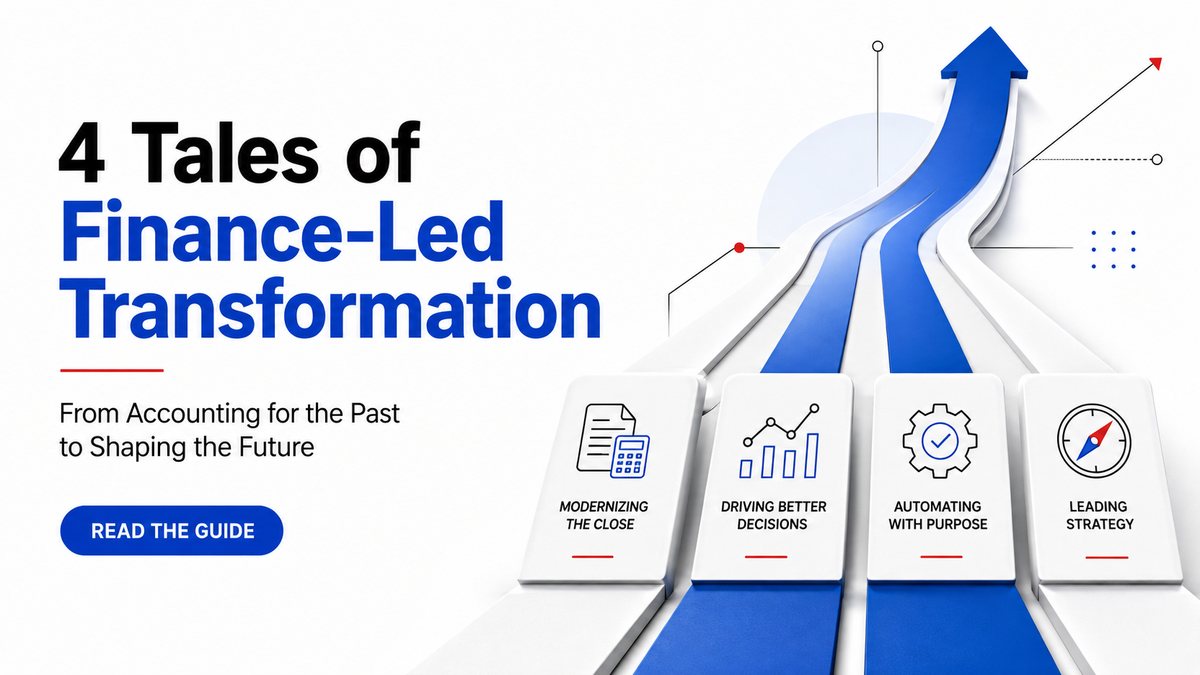
Nobody knew where the shopping bags came from.
Lululemon's CEO told the room the shopping bags were a strategically important marketing asset. Michael van Keulen asked where they came from. The CEO did not know, and neither did anyone else: twenty million bags, single-sourced to one supplier in Cambodia who had no other customers, on a nine-month lead time.
That one question is how procurement stopped being purchasing. Four stories in this guide, and each turns on the same move: somebody made the invisible part of the business legible before trying to change it. Lululemon, The New York Times, Danaher, LiveRamp.
Read the guide →Free guide from Everest. Registration required.
2. Security Leaders Expect Their Own Agents To Get Past Them
A survey of more than 1,600 IT and security leaders found 86% expect AI agents to break past their controls within the year, which is an unusual thing for a profession to say out loud about software it just approved. The rest of that survey explains it. Only 23% claim they can see every agent running in their environment. 88% cannot roll back what an agent did without breaking something else. More than 80% say the agents cost more oversight than they return in efficiency, and that last one is the quiet killer, because it is a business-case finding wearing a security badge. The vendor answer, so far, is more AI on the watching: Proofpoint just wired OpenAI's Daybreak models into security operations.
Here's what works: Before the next agent goes live, demand the rollback procedure in writing. If nobody can undo one hour of its work, it is not production ready.
3. The Only Agents Running Unsupervised Work In A Mine
While the office argues about oversight, autonomous haulage has been running in open pits at minus forty-two degrees, covering more than 4.1 million kilometres without a major accident, round the clock, nobody in the cab. It works for unglamorous reasons: one job, a fixed route, a physical envelope you can measure, and an industry that publishes its gaps rather than hiding them, with 17 of 29 desirable dispatching features still openly unaddressed. Now set that beside KPMG's pulse survey, where roughly 7% of organisations report established ROI on an average planned AI spend of $188 million. The pit has narrow scope and honest gaps. The office has broad scope and a budget.
Here's what works: Narrow the scope until you can name the agent's single countable output. Broad autonomy is where the oversight cost quietly eats the return.
Quick hits:
- Cloud security got its first modern unicorn. Upwind closed $300 million at a $3.8 billion valuation, a large bet that watching what runs in production now matters more than checking what shipped.
- Dubai is training 14,000 companies at once. Dubai Chambers will train 14,000 private sector companies in agentic AI, which turns adoption from a procurement decision into a labour-market one.
- A machine closed a 350-year-old problem in eleven days. Claude completed a computer-verified proof of Fermat's Last Theorem, and the verified part, not the proof, is what makes it usable.
Find the perfect marketing agency, for free.

Stop writing RFPs. Tell us your budget and needs, and our experts send back 3 or 4 agencies worth pitching. The no cost way to source the best agency, without lifting a fingers
 Signal vs. Noise
🟢 Signal: who signs for the agent. A Dutch regulator just put a nine-figure price on decisions made without a person in the loop, India is drafting what a bank's AI vendor contract must contain, and a core banking vendor shipped an agent layer into the plumbing in the same week. Most coverage is still tracking model launches, which is the one part of this nobody gets fined for.
🔴 Noise: ”data governance.” It is still the most-said phrase of the week and less and less is actually hanging off it. The real work moved to a narrower question, who approved this action and how fast can you undo it, and no amount of new policy documentation about data answers that one.
 From the 190K
We scanned 190,000 articles this week. Here's what no one's talking about:
Navana.ai raised a Rs 40 crore Series A for voice agents, Jaipur Robotics took €4.3 million to point computer vision at a waste line, and DataAgent came out of stealth with $10 million for an agent that repairs Kubernetes and ships as open source.
Read one at a time and they belong to three different desks: the India startup wire, a Swiss cleantech round-up, a DevOps trade brief. Read them on the same morning and they are all the same shape. One job. One visible output. Somebody can look at what the thing did and undo it. That is the exact opposite of the enterprise picture in today's second story, where most buyers cannot see their agents at all, and it is where this week's money actually went. Scope is quietly becoming the product.
What changes on Wednesday is the question you put to the next agent pitch. Not ”what can it do”, which every demo answers. Ask what it is not allowed to touch, and watch how long the answer takes.
Learn How to Stay Visible in the AI Era

AI is changing how customers discover businesses. If your SEO strategy is built for yesterday's search, your visibility is already slipping. Learn how to optimize your content for today’s AI search results with BELAY’s latest report..
 By The Numbers
- Uber fined $966 million over decisions made without a person in the loop — the rule used predates the current AI vocabulary entirely, which is why it reaches companies that never described themselves as AI.
- 88% of security leaders cannot roll back an AI agent's actions without disrupting systems — from a survey of over 1,600 of them, meaning the undo button is missing almost everywhere it is now needed.
- About 7% of organisations report established ROI on an average planned AI spend of $188 million — KPMG's own quarterly pulse, and the gap between those two numbers is next year's budget argument.
- Upwind raised $300 million at a $3.8 billion valuation — the first unicorn in modern cloud security, priced on runtime visibility rather than on scanning code before it ships.
- Pixxel raised $100 million to expand its satellite fleet — hyperspectral imaging money, backed by Temasek and Seraphim, aimed at the data layer under everyone else's earth-observation models.
- See what's rising across AI and data this week →
 Deep Dive: Nobody Cued The Track
Every DJ learns one small discipline early. Before you push the fader, you listen to the next track in one ear while the room still hears the old one. Cueing. It costs three seconds and it is the only reason a mix does not fall apart in public. What happened with agents this year is that a lot of people pushed the fader and never put the headphones on.
The fader moved first
Agents went into production because they demoed beautifully and the controls were supposed to follow behind. Mostly they did not. In that 1,600-leader survey, only about a quarter say they can see every agent running in their own environment, and the large majority cannot undo one without breaking something adjacent. That is not a governance gap. That is a booth with no monitor.
The bill arrives at the operations desk
And the first serious invoice did not go to a model lab. It went to a ride-hailing company, under a data-protection clause older than the word ”agent”, for decisions that suspended and blocked real people. Every firm running automated eligibility, pricing, fraud scoring or account actions holds that same exposure today and has mostly filed it under IT.
Scope is the only control that has ever worked
The agents that genuinely run without supervision right now move rock. One job, one route, a measurable envelope, and an industry candid about what its systems still cannot do. That candour is the control. Broad scope, a large budget and no monitor is the combination that produced the fine.
What Actually Works
- Make rollback a purchase condition: before an agent ships, write down how you undo one hour of its work. No answer means no go-live.
- Inventory anything that can suspend, block, deny or refuse: those four verbs are what regulators name. Automating the last human out of one of them changes your exposure that day.
- Give every agent one job and one output: narrow scope is the only oversight mechanism that has ever survived contact with production.
- Put return and oversight cost on the same page: if the agent needs more watching than it saves, that is a finished business case, not a security ticket.
The room never knows whether you cued the track. It only hears the gap.
 What's Coming
Incident Reports Become A Routine Filing
OpenAI submitted an EU incident report after agents hijacked a German website, and the Commission's line was that such reports must be precise and accurate. Once one lab files, filing becomes the norm rather than the admission. Expect a public record of agent failures to start accumulating, and expect your procurement team to start asking for it.
The Agent Moves Into The Core Banking System
Mambu shipped an agentic layer into core banking, which is a different category of risk from an agent in a chat window. Core systems move money and close accounts. When the agent sits there rather than beside it, Article 22 stops being a compliance slide and becomes an architecture decision.
The First Public Price Check On Agent Economics
Moonshot filed for a $3 billion IPO, and a filing forces disclosure that a funding round never does. Whatever unit economics the agent business actually has, somebody is about to publish them in a document with legal consequences attached. That will reprice the private rounds too.
 For Your Team
Wednesday's meeting prompt: ”List every process where we have automated the last human out of a decision that suspends, blocks, denies or refuses something for a customer. For each one: who approves it, who can undo it, and how long the undo takes. If we cannot fill in that table during this meeting, that gap is the finding.”
Share-worthy stat: In a survey of more than 1,600 IT and security leaders, 86% expect their AI agents to get past their own security controls within the year, and 88% say they cannot roll back an agent's actions without disrupting something else. Those numbers come from the people who bought the agents, not from their critics.
Go deeper: Track where agent oversight and AI spending are moving in real time →
 The Track of the Day
”Decisions made solely by automated processing that produce legal or similarly significant effects: account suspensions, payment blocks, benefit denials, credit refusals.”
GDPR Article 22, as the Dutch regulator applied it to Uber
That sentence was written before anybody in this industry used the word ”agent”, and it already describes roughly half of what we now call one. The rule did not move toward us. We walked into it, at speed, with the headphones off.
We scanned 190,000 articles this week so you don't have to. Data Pains → Business Gains.
Published: September 8, 2026 | Curated by Yves Mulkers @ Ins7ghts
1,300+ articles scanned. 7 stories selected. Our AI distills the noise into signal—in seconds. Get early access →
Know someone who'd find this useful? Share your unique referral link →
Want Your Own AI Intelligence Briefing?
Our platform analyzes 1,000+ sources daily and delivers personalized insights in seconds.
Join the Waitlist →Founding members: Lifetime discount • Priority access • Shape the product