

In partnership with


 So, What Actually Happened?
Monday, and I went looking for the AI money story again. I ended up reading about office space. We scanned 190,000 articles this week so you don't have to. Anthropic has taken over 900,000 square feet on one San Francisco street, Google took five buildings near its original campus, and there are cranes across the road from Nvidia's headquarters. Then, on a completely different desk, Newsday and The Seattle Times sued over training data, which is a bill for material that went into models years ago. And in a market-research note nobody will quote, NIQ and Similarweb said they will measure AI shopping traffic by Q4. So the leases are signed, the raw input is being priced after the fact, and the instrument that tells you whether any of it worked shows up in about four months. That order is what bothers me.
The Bottom Line: The industry has committed to permanence on a number it cannot produce yet, and the meter arrives last.
Dictate code. Wispr tags the files.

Speak your PR description, bug reproduction, or Cursor prompt. Wispr Flow auto-tags file names, preserves variable names, and formats everything for immediate paste into GitHub, Jira, or your editor.
No re-typing. No context gaps. No mangled syntax. Works natively inside Cursor, Warp, and every IDE at the system level.
4x faster than typing. 89% of messages sent with zero edits. Used by engineering teams at OpenAI, Vercel, and Clay.
 The Tracks That Matter
1. AI Labs Are Buying Square Footage, Not Just Compute
The construction site in Santa Clara is the AI trade you can walk up to and touch. Anthropic has leased over 900,000 square feet across four Howard Street buildings, OpenAI holds 800,000 in Mission Bay plus a Mountain View campus built for 1,500 people, and Google quietly took five buildings totalling about 1.5 million square feet. The IMF calls the resulting shape winner-take-most. Saudi Arabia is running the same play at national scale, where HUMAIN agreed to deploy autonomous trucks with Applied Intuition by 2030. Compute can be leased, cancelled, resold. A decade of rent on Howard Street and a 2030 logistics commitment cannot. That is what conviction looks like once it stops being a slide.
Here's what works: Ask a vendor how long their own lease runs. Contract length is the honest version of the roadmap.
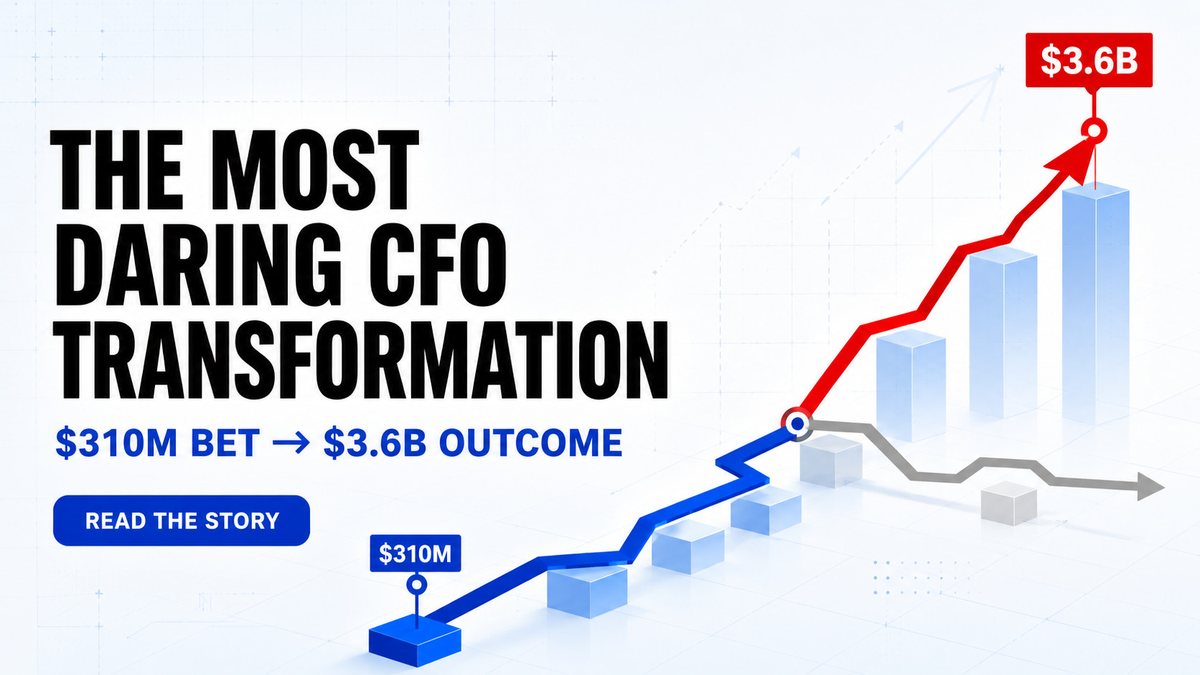
A $310M bet nobody liked. A $3.6B outcome.
Acxiom paid $310 million for LiveRamp, and their CFO says plainly that they overpaid. Then they did the thing nobody saw coming: they sold the other business, the one carrying 75% of the staff and 100% of the cash flow, and kept the one that was not earning yet.
If you have ever argued that the data asset is worth more than the business wrapped around it, this is that argument winning at scale. Warren Jenson (ex-CFO at Amazon, Delta and NBC) walks through how he got the board there, and what he had to prove with the numbers first.
Read the full story →Free download, registration required.
2. The Regional Papers Came For The Training Data
Newsday and The Seattle Times sued over AI training data this weekend, and the interesting part is not the defendants. It is the plaintiffs. The first wave of these cases came from national titles with in-house litigation budgets and a lot to lose. This one reaches into the regional press, where the newsroom covering your county council has worked out that its archive was an ingredient. Every model in production today was trained before anybody priced that material. The buildings got leased, the wafers got contracted, and the raw input is being invoiced afterwards by people who were never at the table. Retroactive pricing on a committed cost base is an ugly shape for anyone holding a ten-year lease.
Here's what works: Ask your vendors what their training-data indemnity actually covers, then get the cap in writing. Most caps are smaller than the exposure.
3. Google Just Halved The Read Cost Of Long Context
While everybody counted square footage, Google's Declarative Attention cut KV cache reads by 52% on long-context tasks. In plain terms, the most repeated operation in running a large model got roughly half as expensive, in software, with no new silicon involved. Now set that against the physical side, where AI hardware needs about three times the wafer capacity per chip that ordinary memory does, and Micron's high-bandwidth supply is sold out through 2026 on binding take-or-pay contracts. One of those constraints has already been paid for in cash. The other just moved by half in a research write-up. Most 2027 budgets assume efficiency is flat and capacity is the only lever. Both halves of that had a bad weekend.
Here's what works: Before you approve next year's inference budget, ask what it assumes about cost per token. If the answer is ”flat”, rebuild it.
Quick hits:
- Vulnerability volume passed what people can read. Cloudflare put AI on remediation against a record 60,475 CVEs logged this year, which is less a product launch than an admission that the queue outgrew the team.
- AI shopping is about to get a scoreboard. NIQ and Similarweb will measure ChatGPT and Gemini shopping by Q4 2026, so the traffic your brand currently cannot see gets a number roughly one quarter from now.
- Your analytics stack just opened a door for agents. Amplitude shipped an integration letting AI tools query behavioural data directly, which is convenient right up to the moment somebody asks who approved that query.
One idea shouldn't take six rewrites to post.

Posting everywhere means rewriting one idea six times, so you post to one, or none. SureThing turns one idea into native posts for every platform.
 Signal vs. Noise
🟢 Signal: models are being retired faster than they can be procured. GPT-5.3 Chat was quietly discontinued while four labs shipped new flagship models inside the same window. A production model's shelf life is now shorter than a normal enterprise procurement cycle, which means the thing you signed for can be deprecated before it finishes rolling out. Retirement notices never make headlines, launches always do, so the coverage only ever shows you half the clock.
🔴 Noise: the model leaderboard. GPT-5.6 Sol, Claude Fable 5.1, Claude Mythos 5.1, Gemini 3.8 Flash, all within days, each arriving with its own benchmark table and its own thirty-point gap. ”Model fatigue” is a phrase people now say out loud. Ranking this week's release tells you nothing about which one you will still be running in eighteen months, and that is the only version of the question with money attached to it.
 From the 190K
We scanned 190,000 articles this week. Here's what no one's talking about:
SciFin came out of stealth with $44 million from Madrona to measure revenue, Ramp Labs is turning agent traces into countable work items, and Clockwork Systems surfaced in a piece about model fatigue inside the labs themselves.
Read one at a time, each belongs to a different desk. The venture wires file SciFin as another seed round. The finance-ops press files Ramp Labs as a spend-management feature. The trade blogs file model fatigue as a cultural grumble from tired engineers. Read them on the same morning and they are all doing one job: working out how to say what the AI actually did, in a unit a CFO recognises. Three years of AI budgets got approved on capability demonstrations, on a good demo and a plausible story. The layer that converts tokens into work items, and work items into money, is only being seed-funded now. After the buildings. After the contracts. After the headcount.
What changes on Tuesday is one question you can put to any AI project already running: what is the unit? Not the model, not the use case, the unit. If nobody in the room can name the countable thing the system produces, you do not have a measurement problem. You have a budget with no denominator.
Own Your Brand's AI Voice

The only platform that designs, licenses, and captures a Branded AI Voice from real, consenting actors—not from scraped data. Trusted by BMW, Superbloom, and Cresta.
 By The Numbers
- Anthropic has leased over 900,000 square feet across four Howard Street buildings — a decade-long bet on people sitting together in a room, signed by a company whose product is supposed to reduce the need for exactly that.
- Google's Declarative Attention cut KV cache reads by 52% on long-context tasks — the single most repeated operation in running a large model, halved in software, with no new hardware in the room.
- A record 60,475 CVEs logged this year, with Cloudflare putting AI on remediation — roughly one new vulnerability every nine minutes, which is past what any human security team can read, let alone patch.
- AI hardware needs about three times the wafer capacity per chip that traditional DRAM does — which is why the squeeze gets counted in millions of wafers and why it runs for years rather than quarters.
- HUMAIN is standing up a $10 billion AI venture fund — sovereign money moving from buying AI to owning the companies that make it, which is a completely different time horizon.
- See what's rising across AI and data this week →
 Deep Dive: You Book The Venue Before You Know The Crowd
I once booked a room for a night three months out. Paid the deposit, printed the flyers, argued for a week about the sound system. What I did not have, and could not have, was any idea whether eighty people would turn up or four hundred. You commit to the space first. That is just how it works, and it is roughly what Silicon Valley did this year.
The lease is the loudest number
Square footage is the one AI figure that cannot be walked back in a press release. A data centre order slips. A GPU contract gets renegotiated. Nine hundred thousand square feet on Howard Street is a signature, a rent roll and ten years. When a company selling software starts leasing like a bank, read the lease, not the deck.
The bill for the back catalogue
Meanwhile the inputs are being priced backwards. Regional newspapers are suing over material that went into models years ago, and the memory behind the hardware is contracted on take-or-pay terms deep into next year. Both are fixed costs that arrive after the commitment rather than before it. Very few plans I have read budget for a cost that gets invented retroactively.
The meter shows up last
And the measurement is the newest object in the room. Shopping through AI assistants gets its first real scoreboard in Q4. The layer that turns agent activity into countable work is being seed-funded this month. Everything expensive was decided before the instrument existed. That is not a scandal, it is just the order of events, and knowing the order is worth actual money.
What Actually Works
- Ask for lease length, not roadmap: a vendor's own contract horizon says more about their confidence than any product slide they will show you.
- Cap the training-data indemnity: get the number in writing before renewal, because retroactive claims on old inputs are now a live category with named plaintiffs.
- Rebuild the inference budget on a falling cost curve: if next year's number assumes flat cost per token, a 52% software cut has already broken it.
- Name the unit before the pilot: decide what countable thing the system produces, or you will spend next year defending a spend with no denominator.
The room gets booked either way. The only real choice is whether anybody is counting the door.
 What's Coming
Regional Newsrooms Start Pooling Their Claims
Now that the copyright fight has reached the regional press, expect the economics to change shape. A single county paper cannot fund this. Two hundred of them, filing together through one firm, can. Watch for the first consolidated action rather than the next individual suit.
Wafer Allocation Becomes The Procurement Conversation
With AI silicon eating three times the wafer capacity of ordinary memory, the negotiation moves upstream again. Buyers who spent this year arguing about GPU pricing will spend next year asking who holds the memory allocation behind the box, and the answer will be on somebody else's contract.
AI Traffic Gets Its First Audited Number
Once ChatGPT and Gemini shopping gets measured, the arguing stops being philosophical. Some brands will discover assistants already send them meaningful revenue. Others will discover a channel they have been funding on faith. Both findings land in the same quarter, which will make for an interesting January.
 For Your Team
Tuesday's meeting prompt: ”Take our three biggest AI commitments. For each one, what is the countable unit it produces, and who signs off that the number is real? If the best we can answer is a capability rather than a unit, we are running a budget with no denominator, and that is the finding.”
Share-worthy stat: A record 60,475 vulnerabilities have been logged this year, roughly one every nine minutes, and Cloudflare's response is to put AI on the remediation queue. Every security team still hiring its way out of that backlog is solving last year's arithmetic with last year's headcount.
Go deeper: Track where AI money and AI measurement are moving in real time →
 The Track of the Day
”Generative AI should never be used to complete a task that the employee making the request does not have the expertise to verify themselves.”
The Institute of Analytics, in its internal generative AI policy
They call it the Golden Rule. It is the most restrictive sentence I have read all week, which is probably why it is the only one that survives contact with an audit. It also quietly guts a large part of the productivity pitch, because the pitch was doing work you could not do yourself. Somebody finally had to write that down.
We scanned 190,000 articles this week so you don't have to. Data Pains → Business Gains.
Published: September 7, 2026 | Curated by Yves Mulkers @ Ins7ghts
1,300+ articles scanned. 7 stories selected. Our AI distills the noise into signal—in seconds. Get early access →
Know someone who'd find this useful? Share your unique referral link →
Want Your Own AI Intelligence Briefing?
Our platform analyzes 1,000+ sources daily and delivers personalized insights in seconds.
Join the Waitlist →Founding members: Lifetime discount • Priority access • Shape the product