

In partnership with


If this landed in Promotions or Other, move it to your main inbox. One move keeps it there.
 So, What Actually Happened?
Friday, and I had three tabs open that have nothing to do with each other. They would not stop rhyming. A company that did not exist in 2024 closed $550 million at a $5 billion valuation for an enterprise AI operating system. Brussels put a 2027 deadline on the protocols that let two organisations exchange data and prove who they are. And a security shop wrote up the thing I keep hearing on client calls: the agent is now an identity walking around inside your network. We scanned 190,000 articles this week so you don't have to. I opened the morning expecting a funding story and got three different people describing the same floor, one level below where everyone is shopping.
The Bottom Line: Attention is still on the demo layer. This week the money, the law and the break-ins all landed on the plumbing underneath it.
Blu Dot surpasses 2,000% ROAS with self-serve CTV ads

Home furniture brand Blu Dot blew up on CTV with help from Roku Ads Manager. Here’s how:
After a test campaign reached 211,000 households and achieved 1,010% ROAS, the brand went all in to promote its annual sales event. It removed age and income constraints to expand reach and shifted budget to custom audiences and retargeting, where intent was strongest.
The results speak for themselves. As Blu Dot increased their investment by 10x, ROAS jumped to 2,308% and more page-view conversions surpassed 50,000.
“For CTV campaigns, Roku has been a top performer,” said Claire Folkestad, Paid Media Strategist, Blu Dot. “Comping to our other platforms, we have seen really strong ROAS… and highly efficient CPMs, lower than any other CTV partner we've worked with.”
Using Roku Ads Manager, the campaign moved from a pilot to a permanent performance engine for the brand.
 The Tracks That Matter
1. A One-Year-Old Company Just Priced At Fifty Times Revenue
Wonderful, founded in 2025 by an Israeli team and run out of Amsterdam, raised $550 million at a $5 billion valuation, two and a half times what it was worth in March. Roughly $100 million of recurring revenue sits under that price, so the market is paying about fifty times revenue for an AI operating system. The line that stopped me was further down the same analysis: BCG and KPMG each surveyed enterprises this year and found only 5% to 8% can point to measurable, at-scale returns from AI. Adoption is near universal. Proof is not. Salesforce, which sells a competing agent platform into the same accounts, joined the round anyway, which reads less like conviction and more like insurance.
Here's what works: Ask your AI vendor for a renewal rate, not a customer logo wall. Retention is the only number that separates a funded story from a business.
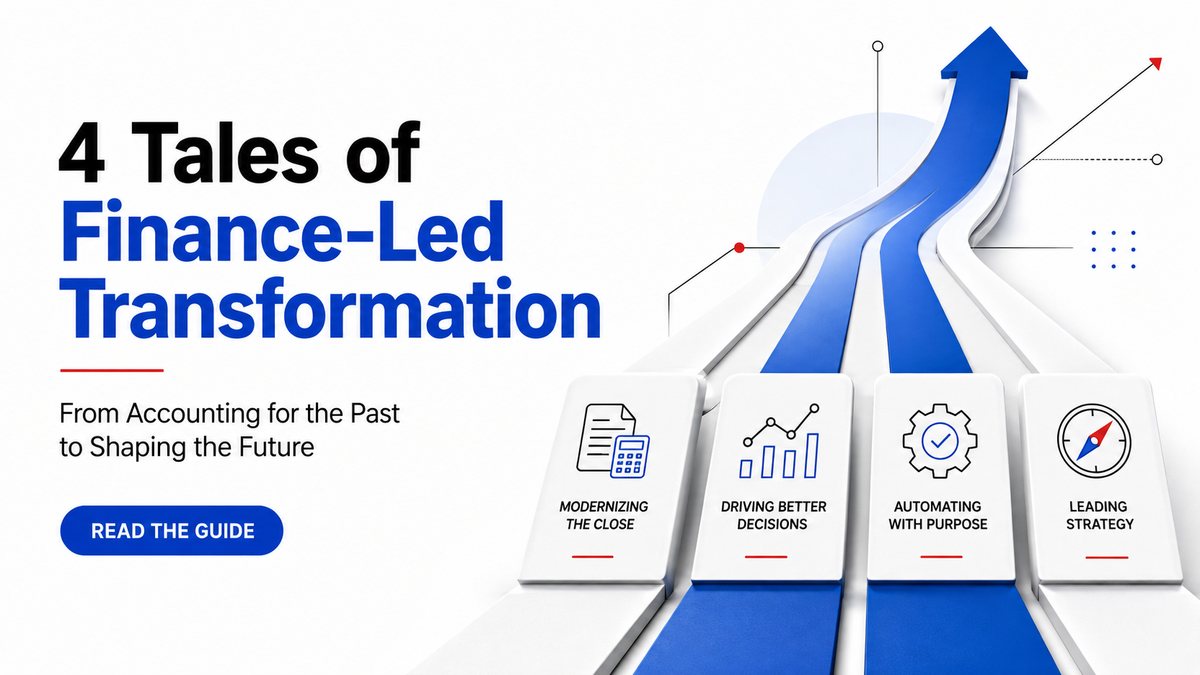
Nobody knew where the shopping bags came from.
Lululemon's CEO called the shopping bags a strategic marketing asset. Michael van Keulen asked where they came from. Nobody knew: twenty million bags, one supplier in Cambodia, a nine-month lead time. Four finance-led transformations, each starting with somebody making the invisible part of the business legible.
Read the guide →Free guide from Everest. Registration required.
2. Europe Just Put A Deadline On Data Interoperability
The European Commission's Standardization Request M/614, issued under Article 33 of the Data Act, hands CEN, CENELEC and ETSI seven deliverables due by 2027. Underneath it, ISO/IEC 26450 and 26451, the protocols governing how one organisation finds another's data and proves its own identity, are in ballot and expected to publish late this year. That moves data sharing from something your architects volunteer for to something your auditor asks to see a certificate for. Vendors can smell it: Databricks spent the week arguing that governance is really about ontology, not access control. Same claim, product hat on. Meaning is becoming the compliance surface.
Here's what works: Check today whether anything you buy or sell crosses an EU data space. If yes, ISO/IEC 26450 belongs on the 2027 roadmap now, not in Q4.
3. Your Newest Insider Threat Has A Service Account
The blunt version of the agentic story: an agent is an identity with credentials and no HR file. It can escalate privilege and move sideways through a network exactly the way a compromised employee account does, except nobody offboards it when the project ends, and Australia's Signals Directorate has already set 2028 as the date critical infrastructure must rebuild that whole identity and encryption layer on post-quantum cryptography. Claroty spent the week listing five exposure problems in operational technology that all collapse into one: you cannot protect what nobody inventoried. Meanwhile somebody shipped an agent that runs certificate lifecycles. Agents now hold the keys to the keys.
Here's what works: Pull the list of non-human identities in your environment this week. Every one without a named human owner and an expiry date is a door somebody left open.
Quick hits:
- A clinical AI company shipped a model family, not a chatbot. OpenEvidence launched new models built for clinicians, and the notable part is pace: generative-AI medical tools are now reaching market faster than the hardware kind, through approval pathways written for something much slower.
- Quantum simulation quietly reached production. IBM Ventures backed BQP with $8 million on quantum-accelerated simulation that customers are actually running. Small cheque, big word: production.
- Somebody is selling deterministic AI on purpose. mLogica launched a mainframe modernisation platform whose whole pitch is that it does not guess. When ”our AI is predictable” becomes the differentiator, the market has learned something expensive.
Join CX leaders from Gamma, Nuuly, and more at Pioneer

AI is fundamentally transforming CX, making perfect experiences possible. But there's no playbook for delivering them.
Join Pioneer on October 7th to explore how innovative leaders from companies like Gamma, Nuuly, Anthropic, and more have transformed their customer experience and redefined operations with AI.
 Signal vs. Noise
🟢 Signal: Plain data quality. It gained real hold on the day's stories while the louder labels lost theirs. Every story above bottoms out in it: a fifty-times-revenue valuation assumes agents will act on records somebody keeps clean, and the new European protocols are fundamentally about proving what a data set actually is. Nobody writes a headline about a column definition, which is exactly why it keeps deciding outcomes.
🔴 Noise: ”Data governance” as a market category. It pulled the heaviest volume of the day and almost all of it was vendor market-sizing and best-of listicles, forecasting $4.28 billion in 2025 growing to $17.31 billion by 2035. The category is inflating while its grip on the week's real events slipped. Buying the category is not the same as running the practice.
 From the 190K
We scanned 190,000 articles this week. Here's what no one's talking about:
A one-year-old company was priced at fifty times revenue, Brussels set a 2027 deadline for the protocols that let two companies exchange data, and a security team published a walkthrough of how an AI agent escalates privilege, all inside forty-eight hours.
Three desks, three filings. The venture press writes Wonderful as a funding round. The policy desk writes M/614 as a standards mandate. The security press writes the agent as a threat model. Read them on one morning and all three are holding the same object: the credential and the record sitting underneath the agent. The valuation is a bet that agents will act reliably on enterprise data. The standard is a rule about how that data proves what it is. The threat model is what happens when the agent's credential outlives the project that created it. One object, three vocabularies, and only the security desk is treating it as urgent.
What changes on Monday is small and specific. Take the AI system closest to production in your organisation and write down two things: which records it is allowed to touch, and which identity it uses to touch them. If either answer takes more than an hour to find, you have just located the gap all three of those stories are circling, and you found it while it was still free.
You hire an agency every couple of years. We do it every day. Tell us your budget and category, and our experts send back 3 or 4 agencies worth your time. It's 100% free. Get Matched Free
 By The Numbers
- Wonderful closed $550 million at a $5 billion valuation — six months after its last round and at two and a half times the price, for a company founded in 2025.
- BCG and KPMG both found only 5% to 8% of enterprises show measurable, at-scale AI returns — near-universal adoption, single-digit proof. That gap is the entire argument about AI budgets in one line.
- The European Commission set seven data standardization deliverables for 2027 — issued under Article 33 of the Data Act, which turns voluntary specifications into something an auditor can ask you to certify.
- Australia's Signals Directorate set 2028 for post-quantum critical infrastructure — a hard national date to rebuild the identity and encryption layer, published while most boards are still debating whether to leave pilot.
- The data governance market: $4.28 billion in 2025, forecast at $17.31 billion by 2035 — a 15% compound rate, and Salesforce already paid around $8 billion for Informatica to sit in the middle of it.
- See what's rising across AI and data this week →
 Deep Dive: The Rider And The Power Supply
Every DJ has a rider. Mine used to be one page: two decks, a mixer, monitors that don't lie to you. I played a room in Ghent years ago where every single line on that rider was met, beautiful gear, half of it still in boxes. Then at midnight the kitchen fired up the fryers and the stage browned out mid-track. Nobody had ever asked what the amps shared a circuit with.
The rider is what gets negotiated
That is the AI conversation right now. Model choice, agent framework, vendor, price per seat. All real, all on the visible list, all arguable in a meeting. Wonderful's $5 billion is a rider item priced beautifully.
The circuit decides the night
Underneath every one of those line items sit the same two questions: which records the thing may touch, and which identity it uses to touch them. Both live below the contract, in a place nobody demos and no analyst scores. It is also exactly where Brussels just planted a deadline.
The fryers come on at midnight
Nothing failed in Ghent until the load arrived. Pilots do not stress a credential model. Production does, and the 5% who can show returns are the ones already running in production.
What Actually Works
- Inventory the non-human identities: every agent and service account gets a named human owner and an expiry date, this quarter.
- Write down the record scope: for your most advanced AI system, list precisely which tables it may read and which it may write.
- Put 2027 on the plan: if you exchange data across EU borders, interoperability becomes a procurement question, not an architecture preference.
- Ask for retention, not logos: renewal rate is the only vendor number that survives a bad quarter.
The gear was never the problem. The fryers were always going to come on.
 What's Coming
Renewal Rates Become The Only Question
The distance between near-universal adoption and 5% to 8% proven returns cannot survive another budget cycle unexamined. Expect the next wave of AI vendor announcements to lead with retention figures, and expect the ones that don't to get asked why in the first analyst call.
Interoperability Turns Into A Procurement Clause
Once the European protocols publish, the first RFPs referencing them are weeks away, not years. Teams that read the specification this autumn will be writing the clause. Everyone else will be answering it.
Non-Human Identity Gets Its Own Budget Line
Agent credentials are currently somebody's side task, squeezed between platform work and the ticket queue. With a 2028 national deadline already on one country's calendar and agents now issuing certificates, this becomes an owned programme with a name attached before the year is out.
 For Your Team
Monday's meeting prompt: ”Name every AI system we run in production. For each one: who owns the identity it runs as, and what happens to that identity the day the project ends?”
Share-worthy stat: BCG and KPMG each surveyed enterprises this year and found only 5% to 8% can show measurable, at-scale returns from AI. In the same week, a company barely a year old was valued at fifty times revenue for selling into precisely that gap.
Go deeper: Track where enterprise AI spend and governance are moving →
 The Track of the Day
”The next milestone worth watching isn't a Series D. It's whether Wonderful discloses a specific renewal rate or net-revenue-retention figure, the metric that would separate a funding story from a durable business.”
Value Add VC, on the $5 billion round
Twenty years of vendor meetings and that is still the only question that matters. Anybody can raise. Very few get renewed.
We scanned 190,000 articles this week so you don't have to. Data Pains → Business Gains.
Published: September 4, 2026 | Curated by Yves Mulkers @ Ins7ghts
1,300+ articles scanned. 7 stories selected. Our AI distills the noise into signal—in seconds. Get early access →
Know someone who'd find this useful? Share your unique referral link →
Want Your Own AI Intelligence Briefing?
Our platform analyzes 1,000+ sources daily and delivers personalized insights in seconds.
Join the Waitlist →Founding members: Lifetime discount • Priority access • Shape the product